


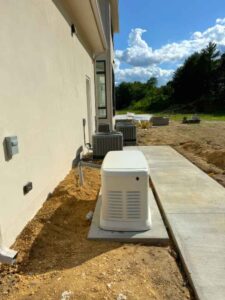
The hard part is done. Your standby generator is in the ground, wired up, and ready to kick on when the lights go out. But the first week after installation is more important than most realize. How you treat your generator in those early days, and how aware you are of the risks involved, sets the tone for how well it performs and how safely it operates for the next decade or two.
This checklist walks you through what to do right after your generator installation in Daytona, FL.
Run the Weekly Self-Test. And Actually Watch It.
Most standby generators run an automatic self-test once a week, usually for about 12 to 20 minutes. During your first week, don’t just let it happen in the background. Stand outside and observe it. Listen for anything unusual, like rattling, rough idling, or unexpected shutdowns. Watch the transfer switch cycle. If something seems off, it is much easier to address now than six months down the road.
Check the Transfer Switch Panel
Your transfer switch is one of the first things to verify after any standby generator goes in. Open the panel and confirm that all the circuits you selected during planning are accounted for. Nothing should be sparking, loose, or warm to the touch. A faulty or improperly installed transfer switch can backfeed electricity into utility lines, which creates a serious risk for utility workers and neighbors. If anything looks off, call your installer before touching anything else.
Understand the Carbon Monoxide Risk
This one is non-negotiable. Standby generators produce carbon monoxide, a colorless, odorless gas that can be fatal in minutes at high concentrations. According to the CDC, generator-related carbon monoxide contributes to thousands of ER visits yearly. Your unit should never be installed near windows, doors, or vents, and ours never are. That said, confirm your placement meets local code and clearance guidelines.
Installing a carbon monoxide detector inside your home, if you don’t already have one, is a simple step that adds a critical layer of protection.
Get Familiar With the Control Panel
Your generator has a control panel that displays status codes, fuel levels, and operational data. Spend a few minutes learning what each indicator means. Your owner’s manual is the best place to start. Knowing your baseline readings now means you’ll recognize a problem reading later.
Inspect the Installation Site
Walk around the unit and check the area around the pad. Look for:
- Proper clearance from the house, windows, and doors. Most manufacturers recommend at least 18 inches from openings (local code may require more), but check your manual for model-specific requirements.
- No debris or vegetation creeping toward the unit
- No signs of water pooling near the base
- The exhaust pointing away from living spaces
Never operate your generator in standing water or a flooded area. Electrical equipment and water are a dangerous combination. These are things our team reviews at every post-installation walkthrough, but it’s good practice for you to know what to look for too.
Schedule Your First Maintenance Appointment
Most manufacturers recommend the first oil change after the initial run-in period, typically around 25 hours of operation. Don’t wait for storm season to find out your oil hasn’t been changed since installation. Our generator services include scheduled maintenance so nothing gets overlooked between seasons.
Know Your Fuel Supply Situation
Standby generators run on natural gas or propane. Confirm with your fuel provider that your supply line is sized correctly for your generator’s load. If you’re on propane, check your tank level and set up automatic refill service if you haven’t already. Never attempt to modify fuel lines or connections yourself. Gas leaks near electrical equipment are a serious hazard, and that kind of work requires a licensed professional. Running out of fuel during an outage is 100% preventable, and so are the risks that come from cutting corners on the fuel side.
Frequently Asked Generator Installation Questions
What happens if my generator doesn’t start during a power outage?
First, check the control panel for error codes. If everything looks normal but the unit still won’t start, contact your installer. Don’t attempt to troubleshoot internal components yourself.
Do you install all generator brands?
We specialize in Generac generator installation specifically. Generac is widely regarded as one of the most reliable standby generator brands on the market, and focusing on one product line means our team knows it inside and out.
Is it safe to be outside near my generator while it’s running?
Brief exposure at a safe distance is generally fine, but you should avoid prolonged time near the exhaust. Keep children and pets away from the unit during operation.
How long does a standby generator last?
With regular maintenance, standby generators typically last 20 to 30 years. Proper first-week habits contribute directly to that lifespan.
Can I run my generator continuously?
Most units are rated for extended run times, but they still need periodic rest and maintenance. Refer to your owner’s manual for model-specific guidance.
Let’s Make Sure It’s Done Right
With 20 years of experience handling residential and light commercial electrical systems, Deltron Electric backs every job with fully licensed, insured, and certified work, plus a free estimate and satisfaction guarantee. Safe, high-end work isn’t just something we advertise; it’s the standard on every job we take.
Contact us for top-notch generator services.